
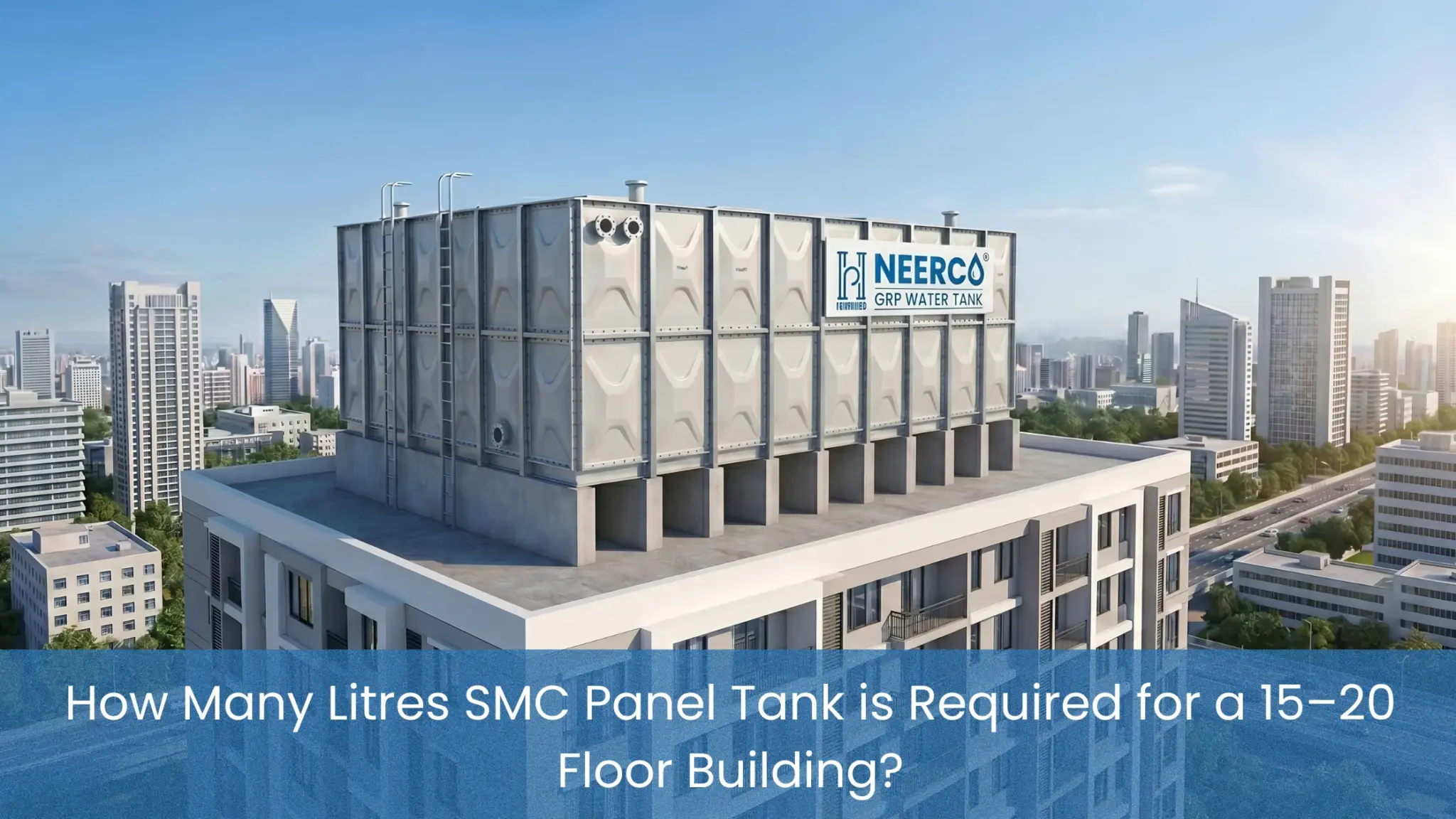
If you’re planning water storage for a high-rise building, this is probably one of the first questions on your mind and rightly so. Getting the tank size wrong can lead to water shortages, pressure problems, and costly fixes down the line. And in a city like India, where water supply can be inconsistent and municipal pressure unpredictable, having the right storage system isn’t just a convenience, it’s a necessity. For buildings with 15 to 20 floors, the challenge is even more significant. You’re not just storing water for a handful of families, you’re managing the daily needs of hundreds of people across multiple floors, each with different pressure requirements and usage patterns. A small miscalculation at the planning stage can snowball into serious operational problems once the building is occupied. This is exactly why builders, architects, and structural engineers are increasingly turning to SMC Panel Tanks with top-level installation as their preferred solution. These tanks are designed to handle high-capacity storage efficiently, without putting unnecessary strain on the building’s structure or the budget. They’re scalable, durable, and most importantly, they’re built for the kind of long-term reliability that a multi-storey building demands.
How Much Water Does a High-Rise Building Actually Need?
Most people assume it’s just a simple multiplication of the number of residents × daily usage. But real-world water planning is a bit more nuanced than that.
According to Indian standards, a residential building requires approximately 135 to 150 litres of water per person per day. That covers drinking, cooking, bathing, cleaning, and sanitation. But in a modern high-rise, you also have to account for:
- Landscaped gardens and common areas
- Gym and amenity zones
- Parking wash areas
- Security and housekeeping staff
- Regular visitors
All of this can push actual consumption 10–15% higher than your base estimate. So a little buffer in your planning goes a long way.
Calculating the Right Tank Capacity for 15–20 Floor Buildings
Once you know your daily water consumption, the next step is figuring out how much storage you actually need. Engineers typically recommend designing for 1.5 to 2 days of storage. This keeps you covered during supply interruptions or maintenance periods.
Here’s a simple breakdown:
Daily Water Requirement & Tank Capacity by Building Height
Building Height | Estimated Daily Water Consumption | Recommended Storage Capacity (Including Buffer) |
15-Floor Building | ~32,400 Litres | 50,000 to 65,000 Litres |
20-Floor Building | ~43,200 Litres | 65,000 to 90,000 Litres |
Note: If your building has a firefighting system, local regulations may require a separate reserve tank, which can add significantly to the total capacity.
Why Top-Level SMC Panel Tank Installation Works Best for High-Rise Buildings
Installing the tank at the top of the building isn’t just a space-saving trick; it’s a smart engineering decision. When the tank sits at the highest point, gravity does the heavy lifting. Water flows naturally to every floor without depending on continuous pumping. This means lower electricity bills, more consistent water pressure, and fewer maintenance headaches. SMC Panel Tanks, also called GRP water tanks, are built specifically for these kinds of demanding environments. Made from high-strength composite materials, they resist corrosion, UV exposure, and harsh weather conditions remarkably well. What makes them even more practical for rooftop use is their modular design. Instead of trying to lift one massive tank to the top of a building, the panels are carried up individually and assembled on-site. No cranes, no structural damage, no hassle.
Important Factors to Consider for SMC Panel Tank Installation
Planning an SMC Panel Tank installation for a high-rise in India involves more than just picking the right size. Here’s what needs careful attention:
- Rooftop load capacity – Before installation, a structural assessment is essential. A full water tank is heavy, and the rooftop must be capable of supporting that weight safely.
- Panel configuration – The layout of the panels needs to be optimized for your available rooftop space while meeting the required capacity.
- Maintenance access – The tank should be positioned so that inspections, cleaning, and repairs can be done without difficulty.
- Ventilation and overflow systems – These are essential for maintaining water quality and preventing structural damage from overflow.
- Pressure management – Since the tank is elevated, it naturally generates pressure. Lower floors may need pressure-reducing valves to prevent damage to plumbing fixtures.
Why Modular Water Storage Solutions Are the Future of High-Rise Construction
Traditional RCC tanks served their purpose, but they come with limitations long construction time, higher risk of leakage, and very little flexibility once built. Modular water storage solutions change that equation entirely. They’re faster to install, easier to maintain, and far more adaptable to different building sizes and layouts. They also offer better hygiene since the materials used resist contamination effectively. For architects and builders working on urban high-rise projects where space is tight and timelines are strict, modular systems have become the go-to choice. And that trend is only growing as more developers prioritize long-term efficiency over short-term shortcuts.
Final Thoughts
Water storage planning for a 15- to 20-floor building isn’t something you want to leave to guesswork. The numbers matter, the materials matter, and so does the installation approach. With the right SMC Panel Tank top-level installation, you get gravity-fed distribution, corrosion-resistant durability, and the flexibility to scale as your building’s needs evolve. As GRP panel tank installation in India continues to grow across urban infrastructure projects, these modular systems are proving themselves as a reliable, future-ready solution. If you’re looking for expert guidance on sizing, installation, or configuration, HP Engineers have the experience to help you get it right from the start.